
Air Source Heat Pump Services
Air source heat pumps (ASHPs) have gained more attention in recent years as an efficient alternative for heating and cooling in both residential and commercial spaces. Replacing your current central heating system with an ASHP is a great way to keep your property comfortable all year round, offering several advantages.
At Anemoi Air, we provide a range of air source heat pump services, including installation, maintenance, and repairs.
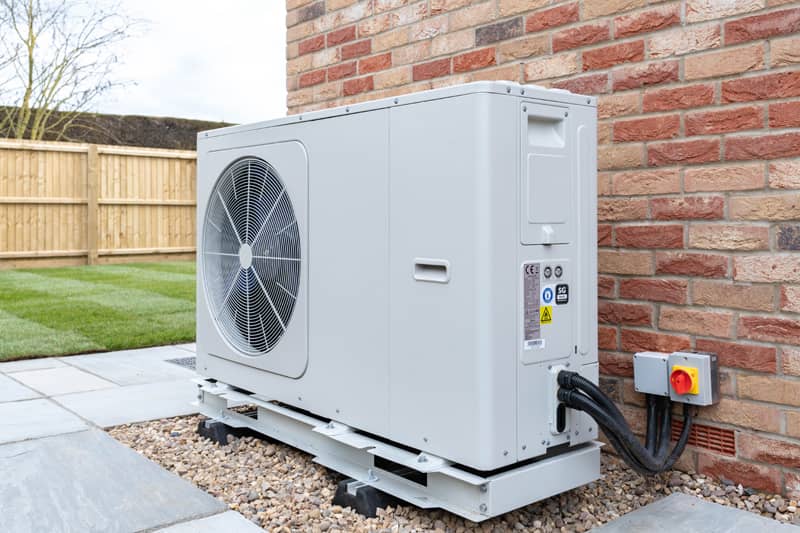
What is a Air Source Heat Pump and how does it work?
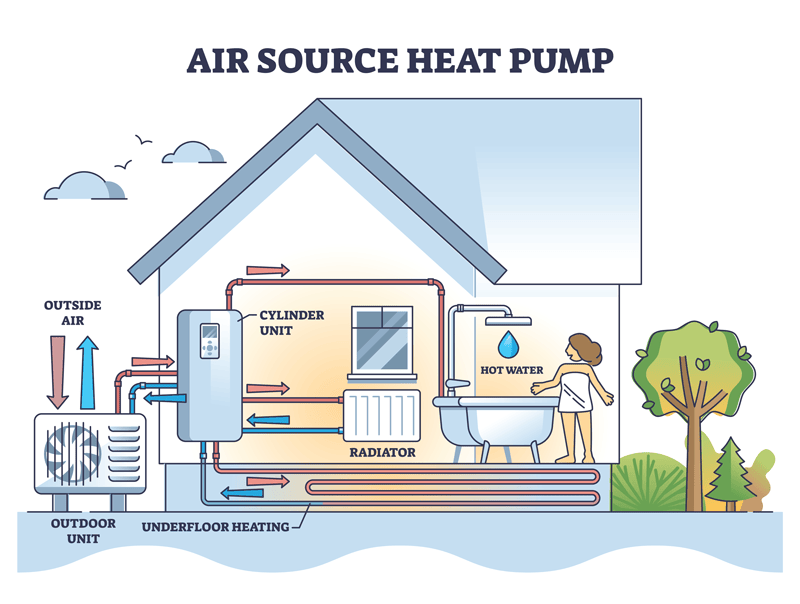
An ASHP is a versatile climate control system that extracts heat from the air to provide heating and cooling throughout a building. Unlike traditional heating solutions that use gas, air source heat pumps use electricity and by moving heat from one place to another, they minimise energy consumption and greenhouse gas emissions in the process.
To provide your home or commercial property with heat, an air source heat pump will use outside air to heat a refrigerant. The refrigerant liquid will turn into a warm gas which is then compressed to a higher temperature within the heat pump before being distributed throughout the building.
When the heat pump system is used for cooling, the process is reversed. The ASHP will take heat from the indoor air and use the refrigerant to release it outside, effectively cooling the building.
Air Source Heat Pump vs Ground Source Heat Pump
While both air source heat pumps and ground source heat pumps (GSHPs) are excellent choices for energy-efficient heating and cooling, there are some differences between the two that may influence your decision.
ASHPs generally have a lower initial investment cost and require less space to install, making them more accessible for properties with limited outdoor areas. The installation of air source heat pumps can be much quicker and easier too. However, they can have higher running costs than GSHPs.
The Benefits of Air Source Heat Pumps
Investing in an air source heat pump offers several benefits. Replacing your old central heating system can reduce your carbon footprint as well as your energy bills. ASHPs are known for their energy efficiency and if your property is well-insulated, it will retain the heat well, so you won’t have to turn your heating on as regularly. An air source heat pump installation can be a great long-term investment for properties of all sizes.
Air source heat pumps are very convenient heating solutions and they’re suitable for a variety of properties. Due to the size of the external unit, they can be installed almost anywhere and with the help of an expert, you can design a system that meets your unique needs. They don’t usually require planning permission either, speeding up the installation process.
In addition to being easy to install, ASHPs are also relatively easy to maintain. They generally require minimal preventative maintenance and regular servicing can help to keep your system in good condition. Following an air source heat pump service plan that’s designed specifically for your property, system and application can be an effective way to ensure your ASHP is operating efficiently. Whilst you may require some air source heat pump repairs, replacement parts often aren’t needed when you invest in a quality system.
Contrary to common belief, ASHPs can be used all year round, regardless of the temperature outside. Even during the winter months, the system can still use heat from outdoor air to keep your home warm. In the UK, the temperature doesn’t tend to get low enough to impact the efficiency of an air source heat pump. Once installed, your new system will last for many years to come and it’s a very cost-effective investment for a domestic or commercial property.
Frequently Asked Questions About Air Source Heat Pumps
If you’re searching for air source heat pump installers near you, contact our team at Anemoi Air. We offer heat pump services across London and the South-East, and can assist you with your desired system. Below our experts have answered some FAQs about air source heat pumps.
Is an air source heat pump suitable for any property?
ASHPs are very versatile, and they can be effective in a wide range of properties. With both domestic and commercial air source heat pumps available, a system can be designed specifically for your property and needs.
How much does an air source heat pump cost?
Air source heat pump installation costs will differ depending on several factors, from the size of the system to the complexity of the installation. It’s beneficial to contact an expert for a tailored quote if you want to find out how much an ASHP system will cost.
There are lots of different industry-leading brands to choose from when installing ASHPs too and the prices of their systems will vary. For instance, Mitsubishi air source heat pump and Vaillant air source heat pump prices will be different. However, both brands are known for their quality, durability, and longevity.
Do air source heat pumps require maintenance?
While ASHPs are generally low-maintenance, professional servicing is advised to keep the system running optimally. Investing in an air source heat pump service plan can help identify any issues before they disrupt the performance of your system. Regular servicing can help you to avoid expensive air source heat pump repairs in the future.
Can you use an ASHP for underfloor heating?
In addition to being used with traditional radiators, air source heat pumps are ideal for modern underfloor heating systems. Our experts can help you design an ASHP system that meets your specific heating needs, whether you’re using radiators, underfloor heating, or both.
Are government grants available for air source heat pumps?
There are lots of different grants available to help property owners reduce their carbon footprint and help the UK reach its Net Zero goal by 2050. The Boiler Upgrade Scheme could cover part of the cost of replacing your fossil fuel heating system with a heat pump and you could get £5,000 towards an air source heat pump. You can find out whether you’re eligible for this government grant and how to apply on the GOV.UK website.